




• About PHC

    OUR MISSION
    BRIEF HISTORY
    OUR GOALS
    OUR PARTNERS

    FOCUSED PROJECTS

    Golden Gate Park Connect
    Bayview Connect
    Veterans Connect
    Family & Youth Connect
    Growing Home Community Garden

    Our Mission

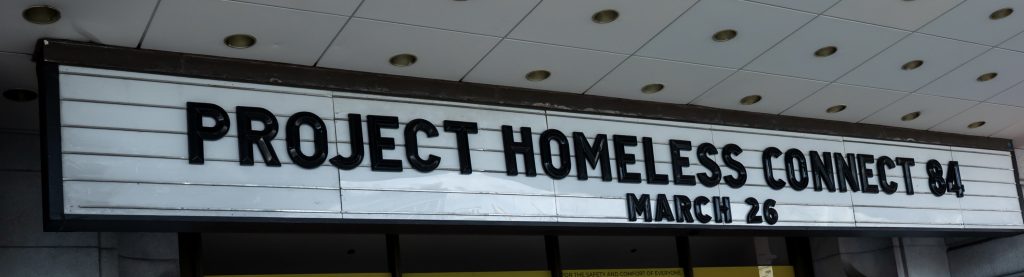
    The mission of Project Homeless ConnectTM (PHC) is to connect San Francisco’s homeless with the system of care that will help them move off the streets and into housing.

    Brief History

    An estimated 6,000-12,000 people are homeless on any given night in San Francisco. Twenty-percent are chronically homeless. Widespread foreclosures, the demands of returning veterans, and the reduction of federal funding for affordable housing create constant challenges in a declining economy. Dealing with the vexing problem requires intervention not only by government but also the community at large.

    The need for Project Homeless ConnectTM (PHC) became clear after 278 volunteers surveyed the homeless in downtown San Francisco in October 2004. Under the direction of Mayor Gavin Newsom, volunteers covered a 60-square-block area in the Tenderloin district, where 85% of the city’s social services are located.

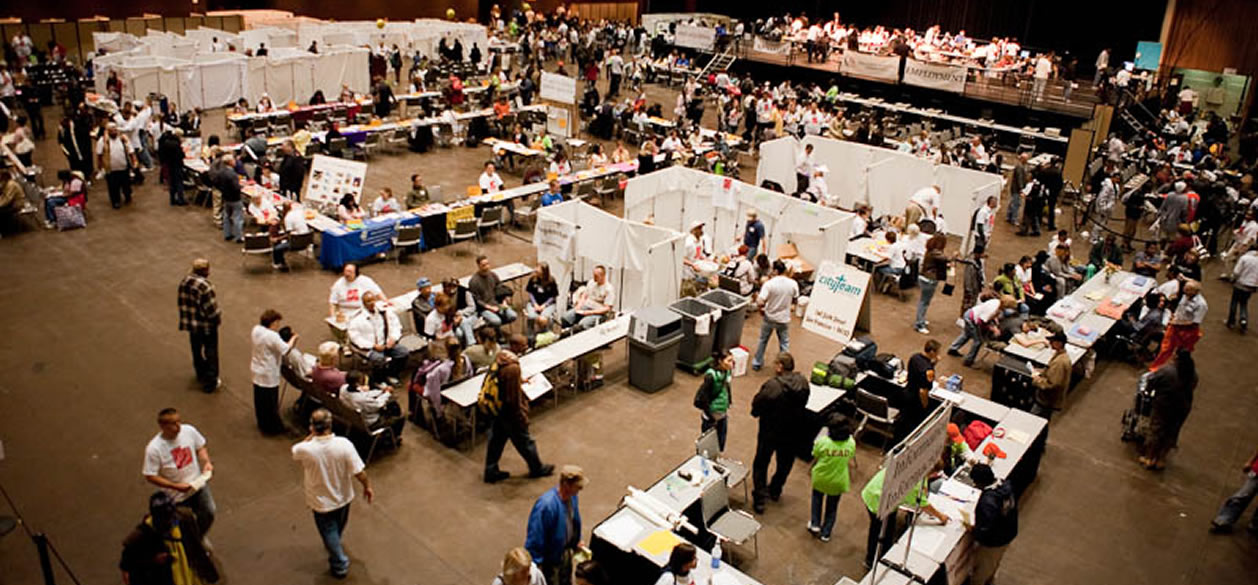
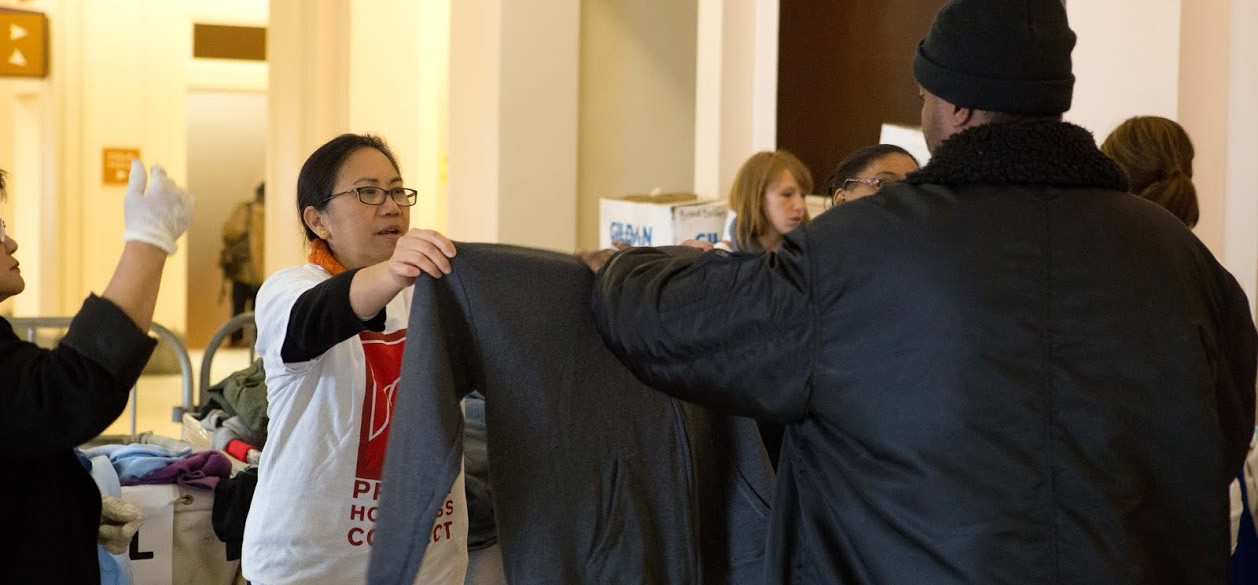
    Today, over 1,000 community volunteers partner with government agencies, nonprofits, and the private sector every two months to provide a one-stop shop of health and human services for homeless San Franciscans. During PHC’s events, participants are able to accomplish in one day what might normally take eight months.

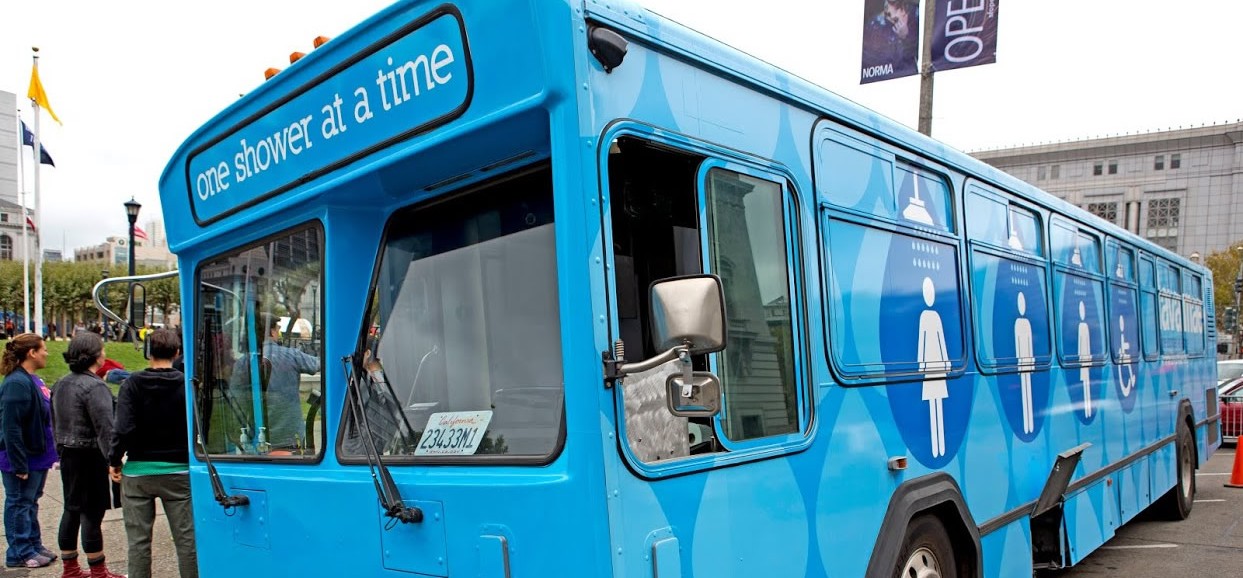
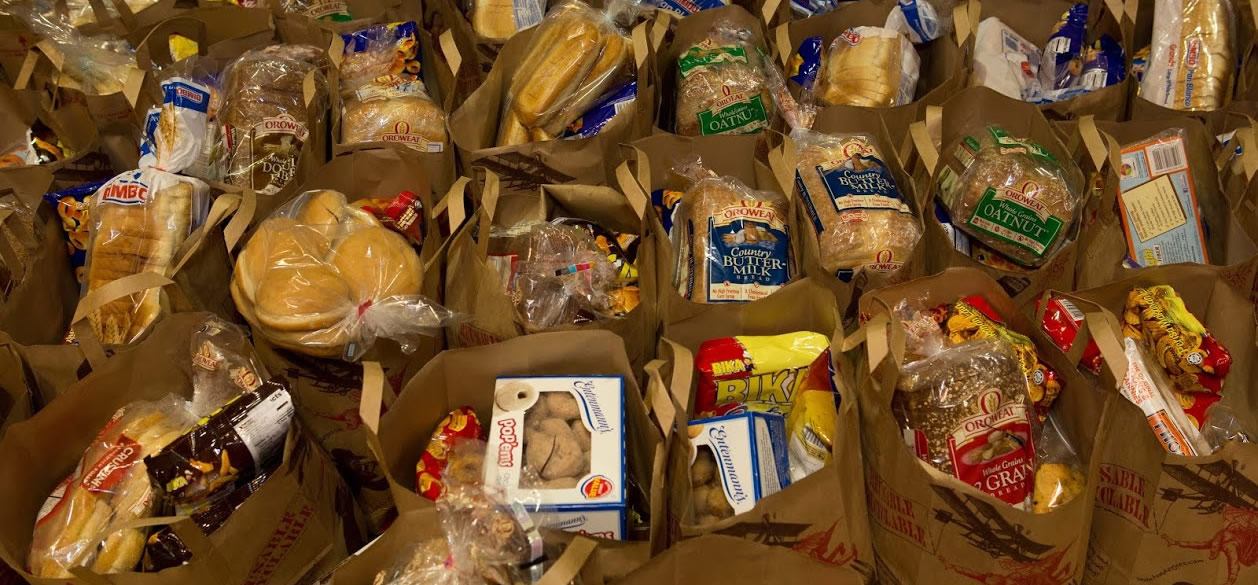
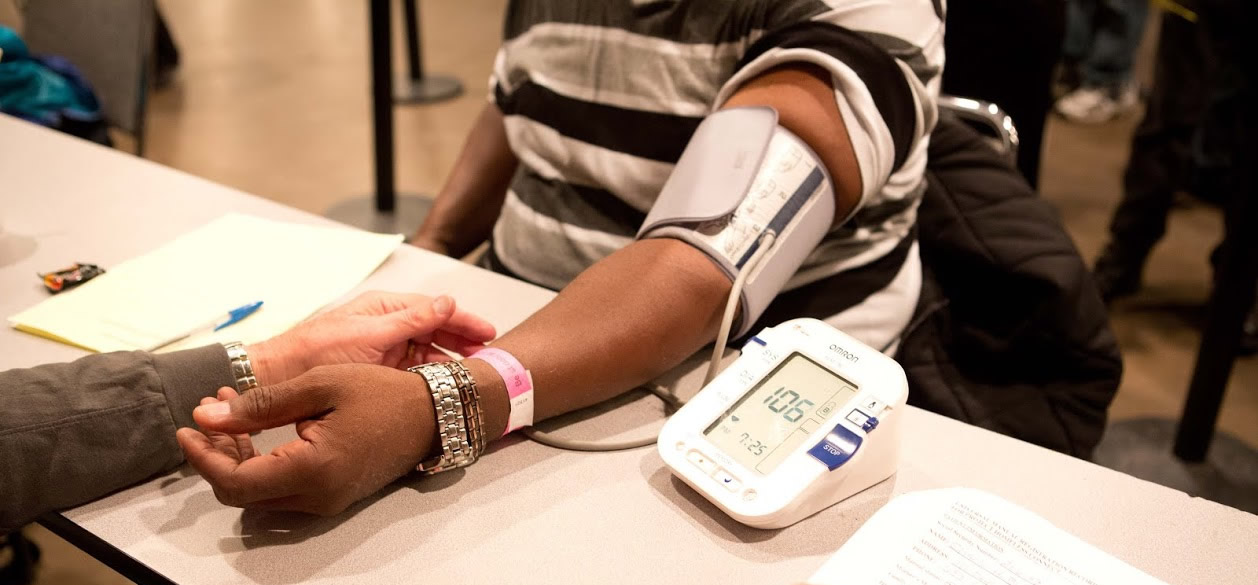
    Hundreds of corporations, nonprofits, and government agencies provide PHC and its clients with services such as dental care, eyeglasses, family support, food, HIV testing, housing, hygiene products, medical care, mental health services, substance abuse treatment, SSI benefits, legal advice, California identification cards, voice mail, employment counseling and job placement, wheelchair repair, methadone, needle exchange, and more.

    In response to the changing needs of the homeless and low-income population, PHC continues to reshape its outreach strategy and improve available services. Recent modifications have included events specifically designed for veterans, families, and children.

    As of June 2010, 20,644 volunteers have provided services to more than 31,661 homeless and poor San Franciscans.

    The federal government’s Interagency Council on Homelessness has declared Project Homeless Connect a national best practice model. PHC is replicated in over 200 cities across the United States, as well as in Canada and Australia.

    In May of 2009, Secretary of Housing and Urban Development, Sean Donovan expressed interest in showcasing Project Homeless Connect as a best practice for national service as part of the recently signed Service Act.

    Our Goals

    The goals of Project Homeless Connect are to:

    - Improve access to services and housing for people experiencing homelessness in San Francisco.

    - Engage with and maintain an active, involved volunteer base that consists of local businesses, nonprofits, and individual community members all working together to help end homelessness.

    - Improve the system of care through collaboration and the sharing of best practices among San Francisco’s homeless service provider community.

    - Partner with the private sector, corporations, and foundations to expand service capacity and funds.

    Golden Gate Park Connect

    ggparkconnectGolden Gate Park is home to many of San Francisco’s major tourist attractions including the Academy of Sciences, Conservatory of Flowers and the de Young Museum. The neighborhoods surrounding the park’s eastern side including Haight-Ashbury, 9th and Irving and the Panhandle are considered home to some of San Francisco’s homeless population, many of whom can be described as younger and transient.

    Beginning in 2007, an effort by the Mayor’s Office helped drop the number of homeless individuals staying overnight in Golden Gate Park from approximately 200 to about 25 individuals. Mayor Gavin Newsom saw the need for Project Homeless Connect to step in and help connect homeless individuals moving out of the park and into the streets of the surrounding neighborhoods. In 2009, Golden Gate Park Connect served almost 200 individuals living in and around the Golden Gate Park area, approximately 50% of whom were below the age of 30 years. This event connected many individuals to services that will keep them off the streets.

    In September of 2010, Golden Gate Park Connect will return to provide much needed services for the homeless. In partnership with the Haight-Ashbury Free Clinic, the Homeless Youth Alliance and Blue Shield of California, this event aims to assist approximately 500 individuals in need. Services and programs for this event will include medical, dental, HIV testing, legal services, Healthy San Francisco, and many others.

    For further information and volunteer opportunities at the upcoming Golden Gate Park Connect event, please contact Amy Golsong at 415.503.2190.

    Bayview Connect

    BayView ConnectThe Bayview Hunters Point neighborhood has the second largest homeless population in the City. In the community 22-percent of residents live below the poverty level, one in three people live with the daily threat of hunger, and many lack access to health care. And when the economy hits a rough patch it’s often the poorest communities that suffer the most.

    Beginning in 2007, Project Homeless Connect, in collaboration with The United Council of Human Services, Bayview Hunters Point Foundation, and Southeast Health Clinic, has brought the “under one roof” model of homeless service provision to the neighborhood. Getting from the Bayview to Civic Center where PHC typically takes place can be can be an ordeal. Bringing those necessary services to those most in need, in the community where they live, further defines the service model for effective and efficient access.

    In 2010 Bayview Connect will feature a special partnership between Project Homeless Connect and Honoring Emancipated Youth (HEY). This event is in honor of National Foster Care Month. Current statistics indicate that 70% of foster care youth become homeless when transitioned out of the foster care system.

    Veterans Connect

    veterans connect logoCurrent statistics indicate between 20% and 33% of people experiencing homelessness are veterans. In the City and County of San Francisco, where the homeless population is between 6,300 and 12,000 persons, veterans may account for 1,260 to 3,960 individuals.

    Between 5% and 10%, or 100 to 200 individuals, at PHC events identify themselves as veterans. Therefore, it appears, a large group of homeless veterans are not accessing services available to them. Veterans Connect was developed to address this discrepancy.

    Veterans Connect is a collaboration of PHC, San Francisco VA Medical Center, City and County of San Francisco, Swords to Plowshares, Vet Center and other veteran groups who will focus outreach to the veteran community. The objective of this unique collaboration and outreach is to connect veterans to services available from the city, the VA and other non-profits.

    Further support and collaboration with the veteran community comes from the San Francisco Veteran Affairs Commission and veterans organizations.

    Family Connect

    family connect logoWith the rising number of homeless and poor families in San Francisco, including emancipated youth, attending the one-day PHC events suited for single adults, Project Homeless Connect responded by hosting a Family Connect.

    According to the San Francisco Unified School District census in January 2009, there are 1,623 homeless students in our schools. Also:

    • Homeless family service providers report their “in-take” service has increased by 200%.

    • Families are precariously housed in doubled-up situations or in substandard housing.

    • Of those who are homeless 80% are between the ages of 18 – 25.

    • Of the City’s homeless population, 2,700 people are members of homeless families, representing roughly 40% of this population.

    • According to the Mayor’s Office of Housing and the Department of Children, Youth and Their Families, homeless and runaway youth is as high as 4,000.

    • On any given night, an estimated 2,000 youth are living on the streets in the City with 95% currently using drugs.

    Through collaboration with the San Francisco Unified School District, the City and County of San Francisco, and the many community nonprofits, Family Connect focuses outreach to families, youth and children and provides crucial services. This one-day event provides participants with services they would not otherwise receive or which may take months to secure. A primary goal of this one-day event is to eliminate the institutional barriers which prevent access to services.

    Growing Home Community Garden Project

    growinggarden_logoThe Growing Home Community Garden’s mission is to provide a community garden where both homeless and housed San Franciscans work side-by-side to grow nutritious food, access green space, and build community.

    Greening the neighborhood and providing edible foods in an urban environment are obvious goals. Skill building, nutritional education, and food preparation classes provide additional community value. However, what makes this program unique is its focus on building community. The GHCG provides an inspirational venue to change community norms and prejudices; to improve community relations-to celebrate and harvest together-this is what makes this project special.

    Today, the Mayor is encouraging citizens to plant gardens and convert vacant public spaces to green space. Problems such as malnutrition, unemployment, and homelessness can be addressed in the same way-through community activism and innovative programs. This is what the Growing Home Community Garden proposes to do.

    Project Homeless Connect, in collaboration with the Department of Public Health, Department of Public Works, San Francisco Clean City Coalition, Farms to Grow, the Hayes Valley Neighborhood Association, and many others, are working to make Growing Home a functional, sustainable, and educational green space while increasing efficient use of the city’s resources for our homeless population.

    The garden is located on the east side of Octavia Street between Page & Oak.

    Click here to see upcoming volunteer days, garden activities, or learn how to get involved.
    Find us on Facebook.

    Please email communitygarden@projecthomelessconnect.com for further information.

© 2010 Project Homeless Connect, Inc.